



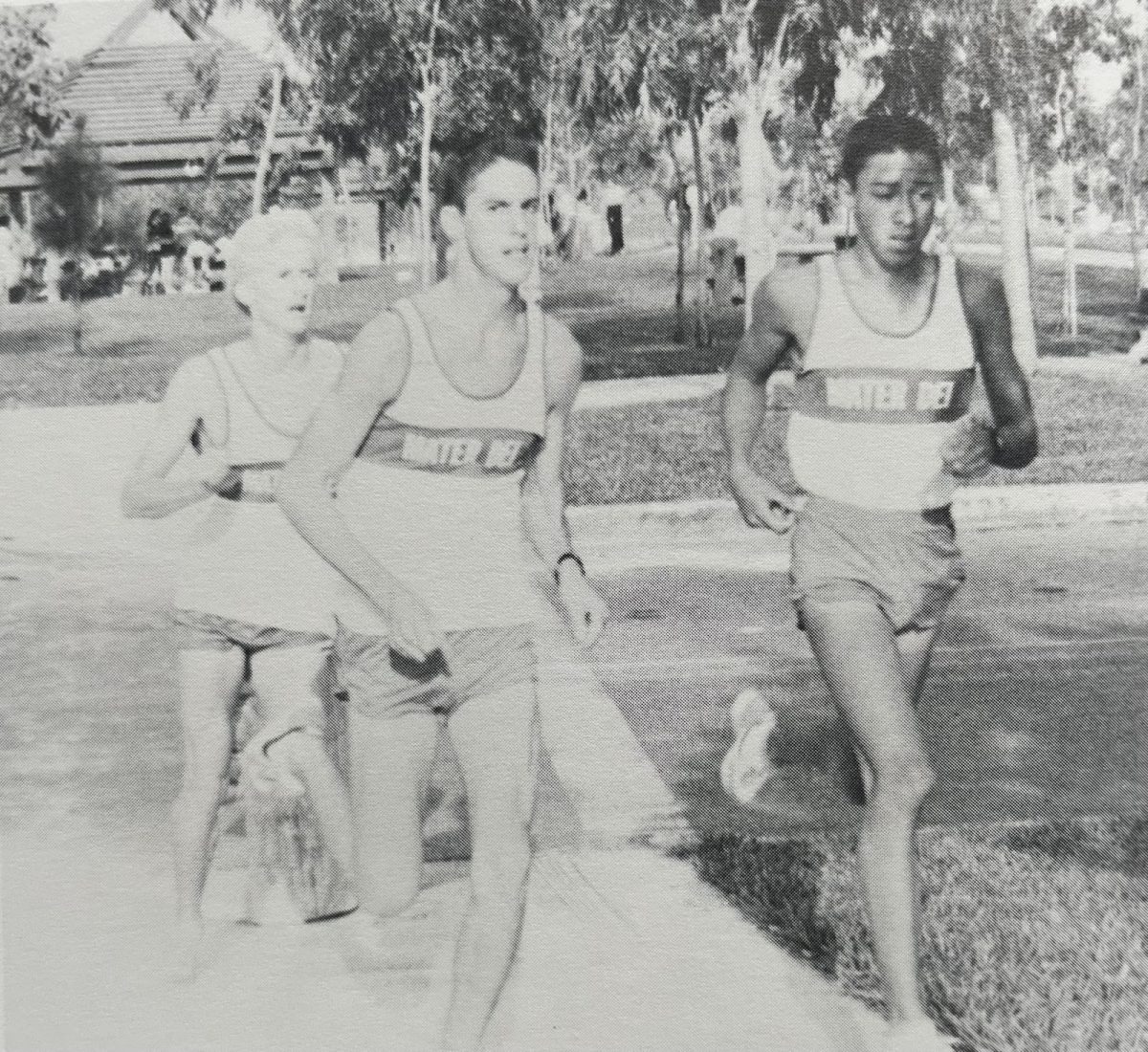
Over the course of 75 years, Mater Dei has left a long-lasting legacy. For those who attended in the 1980s, Mater Dei was defined by school spirit, strong faith, and a growing reputation for athletic and academic excellence. Although the campus has changed drastically since then, the heart of the school remains the same and continues to have a lasting impact. This decade marked the beginning of Mater Dei’s growth from a local Catholic high school to a prominent and elite institution.
Many alumni return to Mater Dei after graduation, drawn by the same traditions, values, and sense of community that helped shape them decades earlier. Rick Martinez ‘83, Science Teacher, Track and Field Head Coach, and Cross Country Head Coach, explains that he returned to campus to make an impact on students, as his coaches and teachers did for him.
“Everything that I learned during that time helped me succeed in college, and I felt like the things that I learned can still be very useful,” Martinez said. “I could give back to today’s athletes and hopefully make their experience just as rewarding as it was for me.”
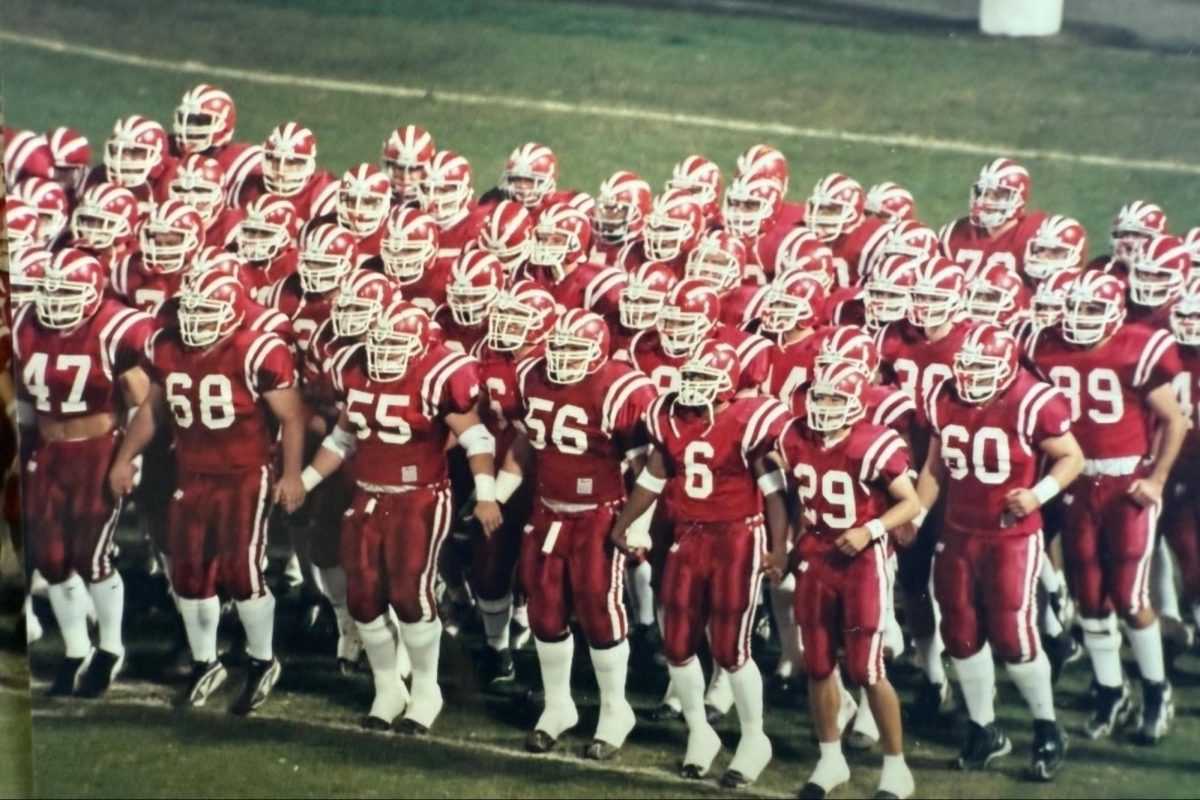
There were many factors that made the 80s an important decade for Mater Dei. For Dean of Students Jason Quinn ’90, welcoming key coaches to Mater Dei’s athletic programs helped build Mater Dei’s legacy and improve students’ experiences. This wave of leadership that came in at that time helped shape Mater Dei’s athletic identity for decades to come. With coaches like Football Coach Bruce Rollinson and Basketball Coach Gary McKnight laying the foundation, the 1980s became a defining era for Monarch sports. Their influence extended beyond wins and losses, instilling discipline, Monarch pride, and a competitive spirit in Mater Dei athletes.
“There were a lot of new coaches,” Quinn said. “Coach Rollinson started in the late 80s. Coach McKnight just got the job in the early 80s. I just think those are two pillars in sports. We had a stronghold in the 80s in sports.”
Social life during the 1980s was built entirely on in-person connections. Going to games was a key factor in students’ social life and school spirit. By comparison, social life today stems from both in-person and social media interactions. Quinn explains why student culture was important to him and to other students in the 80s.
“Kids went to games,” Quinn said. “It didn’t matter what day of the week it was. You get 300-400 students at a basketball game, plus football games. You’d get half the school there,” Quinn said. “I think it has more to do with the lack of social media. Our social media was the games. We would go there, find out what’s going on, where we’re gonna go eat afterwards, or whose house we’re going to. Nowadays, I think that’s all done before the game starts.”
With a lack of social media influence at school, it was impossible to hide who you were and your interactions with others. English Teacher Denise Johnson 83’ feels that this lack of social media was beneficial and impacted the way people behaved with their peers.
“Everybody listened,” Johnson said. “There was no shaming or social media. I think [social media] is not a good thing for young people right now because everybody can hide behind a screen. In the 80s, we didn’t have that. You were original all the time because that’s what people saw.”
Many core principles have remained the same since the 80s. Teachers still hold students to high expectations in the classroom, expecting them to be prepared and responsible. Johnson emphasized that accountability was central to her learning experience.
“Teachers expected you to be prepared every day,” Johnson said. “You had to manage your time and take responsibility for your work on your own.”

Faith also played a central role in student life during the 1980s, shaping both daily routines and the broader campus culture. Prayer was more visibly woven into the school day, and Masses were well-attended, reinforcing Mater Dei’s Catholic identity. Alumni describe a stronger sense of shared values, in which faith, academics, and athletics were closely connected rather than treated as separate entities of student life.
“[Faith] was much bigger than it is today,” Martinez said. “We had weekly chapel commitments as a team [and] we had daily communion service, just like we do now, but those were very well attended. I don’t know if they’re very well attended right now, but there were hundreds of people at the communion service every day during lunchtime.”
There is an unavoidable sense of connection on Mater Dei’s campus that continues to draw alumni back to campus decades later. Math Teacher Sean Lieblang, who has been teaching at Mater Dei since 1985, explains how the close-knit environment impacts students in the long-run.
“You were expected to show up for people,” Lieblang said. “There was a real sense of responsibility to your classmates, your teachers, and the school as a whole.”
The leadership that emerged during the 1980s also played a lasting role in shaping Mater Dei’s identity, particularly within athletics and academics. The decade marked a period of growth, as new coaches and educators helped establish high expectations and a strong sense of pride across campus. Johnson emphasized how that consistency set Mater Dei apart.
“There was a standard you were held to,” Johnson said. “Once you were a Monarch, you carried that responsibility with you everywhere.”
Daily life in the 1980s revolved around constant in-person interaction. Without digital distractions, students formed connections through shared experiences in classrooms, at lunch, and during school events. Lieblang noted that these interactions helped create lasting relationships.
“You built friendships by spending time together every day,” Lieblang said. “There wasn’t anything pulling your attention away from the people right in front of you.”
For many alumni, the values learned during the 1980s, including commitment, responsibility, and pride, remain central to how they view Mater Dei today. While Mater Dei has continued to grow and modernize since the 1980s, many of the core values that defined the decade remain unchanged. The emphasis on faith and community continues to shape the student experience today, even as technology and teaching methods have evolved. As Mater Dei reflects on 75 years of history, the legacy of the 1980s serves as a reminder that, although times change, the school’s heart remains steady, continuously showing honor, glory, and love.

![FRIENDSHIP IN PRINT Members of the Hi-Lighter student newspaper gather for a press conference in 1954. Among them is senior Lenore Rigney (O’Hara), who had worked on the publication for two years after transferring to Mater Dei as a junior. “I found the students were all so friendly and accepting,” O’Hara said. “It was [important] to be friendly to someone new and to help them get used to the school and make friends.”](https://thescarletscroll.com/wp-content/uploads/2025/10/IMG_3582-1200x794.jpeg)
![FAITH THROUGH GENERATIONS Lenore O’Hara ‘54 (right) and Director of Discipline and Attendance Timothy O’Hara ‘78 (left) open the 75th Anniversary Mass in the Grotto. The attendance of alumni, faculty, students, and parents highlighted the connection within the school community. Vice President of School Relations Scott Melvin reflected that this was one of his most memorable moments he has had so far. “At the beginning in our opening Mass, watching Lenore O'Hara go up on stage, speak, and open our Mass, that was really beautiful,” Melvin said. “Although [Mater Dei has] changed tremendously over the years, elements that happened back in 1950 are still present today. And we are still fulfilling the mission of Catholic education and building servant leaders with our students.” Photo courtesy of Mater Dei High School.](https://thescarletscroll.com/wp-content/uploads/2025/09/IMG_3323-1200x808.jpeg)

![GET UP Students laugh and dance at a school rally. All the events and rallies hosted by ASB help bring students together and make school an enjoyable place to be. Senior Maddy O’Connor believes ASB keeps everything together and the school spirit alive. “A lot of things wouldn't be as organized [without ASB] and it'd be kind of boring,” O’Connor said. “ASB brings joy to Mater Dei, and pretty much [all things] cool.”](https://thescarletscroll.com/wp-content/uploads/2026/05/HEIF-Image-1200x800.jpeg)

![OUT OF THE PARK Sophomore Ally Roman takes a swing during her sixth game of the spring season. On Wednesday, Mar. 18, the JV softball team faced Villa Park in a tough matchup. “ I've made a lot [of sacrifices for softball],” senior Savanah Duncan said. “It takes up a lot of time, especially playing at a high level. I would say you have to sacrifice a lot of your time and a lot of outside activities, because a lot of time is just spent on the softball field.”Photo courtesy of Ali DePhillips.](https://thescarletscroll.com/wp-content/uploads/2026/04/HEIF-Image-10-800x1200.jpeg)
