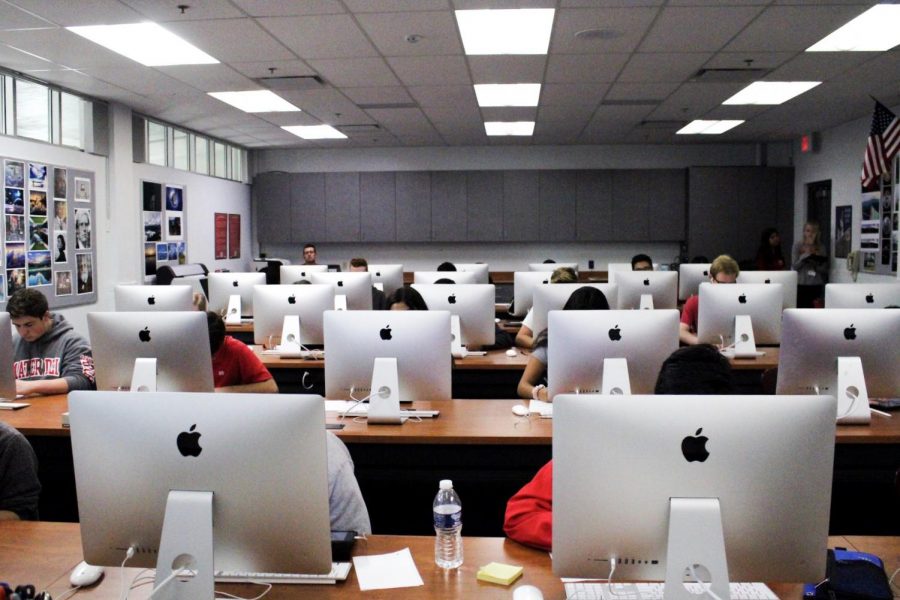
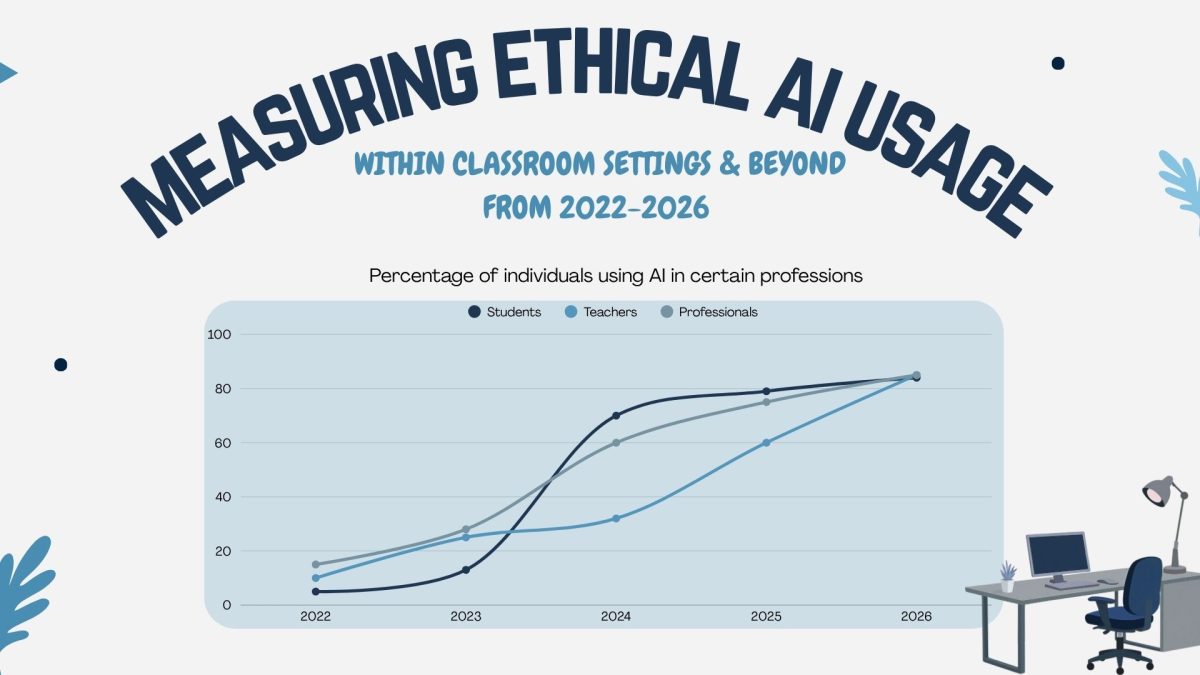
Artificial intelligence (AI) is rapidly changing how students approach school, creating a divide in study habits across classrooms. While some students rely on AI as a daily learning tool, others avoid it entirely, raising questions about how technology is changing education and whether those changes are for the better or worse.
For sophomore Xavier Cruz, AI plays almost no role in his academic routine. He prefers more traditional methods of learning, such as reviewing his notes and memorizing all the material on his own.
“I never use AI or any sort of chatbot for studying,” Cruz said. “I just review the material a few times until I feel confident that I can remember all of it.”
Cruz believes his independence from AI is a strength that allows him to build discipline and confidence without relying on outside tools. However, he acknowledges that artificial intelligence can still be useful to others when used correctly.
“I think students who use AI could be missing out on learning skills,” said Cruz. “But for some people, it could still be very beneficial.”
In contrast, sophomore Pierre Attalla represents a growing group of students who have integrated AI into their daily academic routines. From generating practice questions, breaking down complex topics, and summarizing information for review, Attalla uses AI as a personalized study assistant.
“I use AI almost every day to help me with schoolwork,” Attalla said. “It helps explain complicated concepts in a simpler way, and it allows me to test myself.”
According to Attalla, AI has made studying much more effective and efficient. Instead of passively rereading notes, he is actively engaging with the material by asking questions and completing practice problems.
“It mainly helps me understand material better,” Attalla stated. “I can ask follow-up questions and clarify things by saying ‘Please, I didn’t fully understand.’”
Despite their differences, both students agree on one key point about AI: there is a line between using artificial intelligence as a tool and using it to cheat. That line for both Cruz and Attalla is when students rely on AI to complete assignments without understanding the content.
“Submitting AI-generated work as your own without learning from it is cheating,” Attalla said.
Teachers are also noticing these shifts in the submitted assignments. AP and Honors English Teacher Joshua Long has observed clear changes in students’ writing since AI tools became more accessible to students.
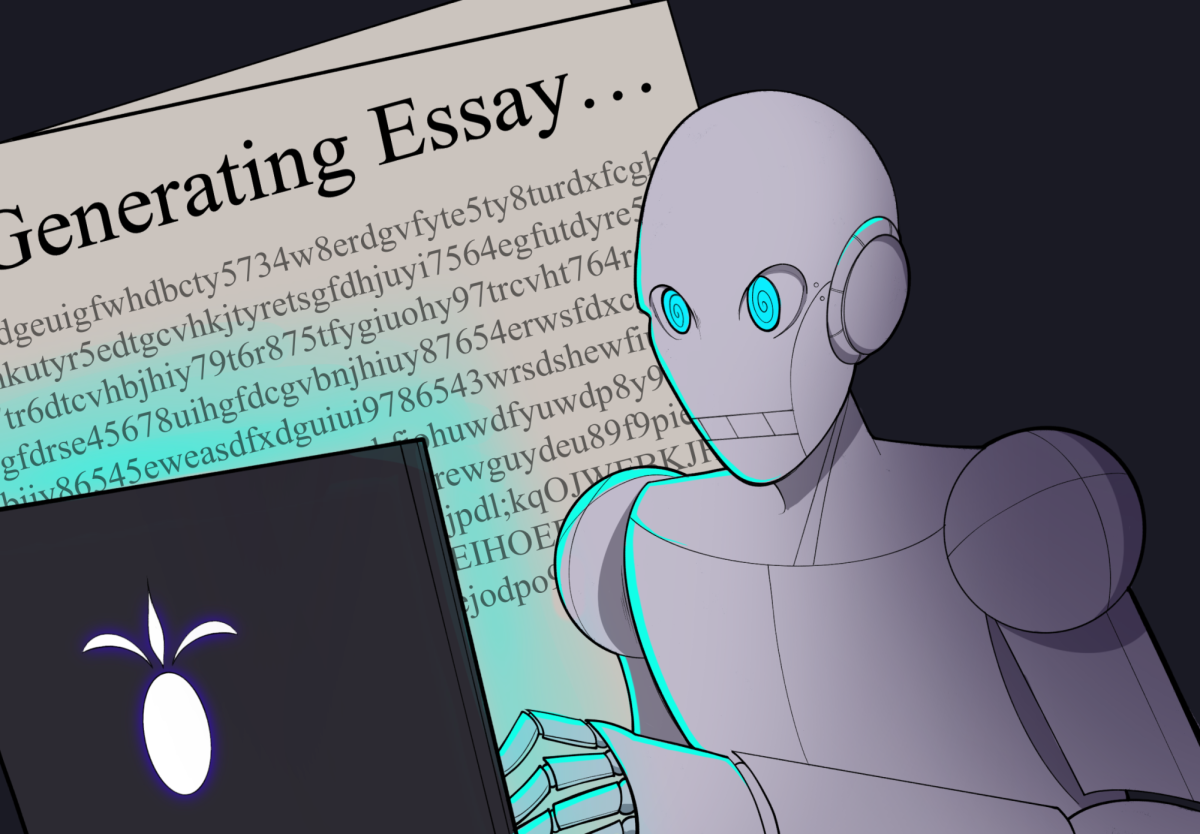
“AI tends to overuse patterns like parallel structure and lists of three,” Long said. “It can sound formulaic or robotic compared to more natural human writing.”
While AI can help eliminate grammar mistakes and improve clarity, Long warns that overreliance on the tool could weaken students’ critical thinking skills, especially in classes that require a lot of writing.
“My greatest concern is that students will struggle to create and analyze arguments,” Long said. “Some [students] are already using AI as a replacement for critical thinking.”
Long stresses that using AI responsibly requires a lot of self-control and depends on clear boundaries. He believes that students should use AI only when instructed to and should prioritize real learning over convenience.
“AI can certainly be used as an education tool,” Long said. “But it is too often used to cheat.”
Looking towards the future, Long predicts that AI will continue to influence education significantly, potentially acting as a personal tutor for every student. However, he also warns that the same technology could negatively affect students’ learning if it is too accessible and not carefully managed.
“With proper guardrails, every student could ideally have access to his or her own personal AI tutor geared towards that student’s needs,” Long said. “Humans are naturally lazy, so without careful management, many students simply use AI to do the work, the thinking, or the writing for them.”
Students like Cruz and Attalla reflect this ongoing tension. One relies on self-discipline and old-school study methods, while the other embraces new technology to enhance understanding. Together, their experiences highlight a larger shift happening in classrooms all around the world.
As artificial intelligence continues to get better and evolve, its impact on study habits will ultimately depend on how students choose to use it. Whether as a shortcut or a support system, the responsibility remains on the student to ensure that their education remains a priority, not just completion.
![GET UP Students laugh and dance at a school rally. All the events and rallies hosted by ASB help bring students together and make school an enjoyable place to be. Senior Maddy O’Connor believes ASB keeps everything together and the school spirit alive. “A lot of things wouldn't be as organized [without ASB] and it'd be kind of boring,” O’Connor said. “ASB brings joy to Mater Dei, and pretty much [all things] cool.”](https://thescarletscroll.com/wp-content/uploads/2026/05/HEIF-Image-1200x800.jpeg)


![WHAT’S TRENDING Being test-optional does not truly mean “optional.” Although some top schools continue the “test blind” policy in their admissions process, the number of accepted students who submitted test scores is substantially more than those who chose not to. Because of the rising number of competitive applicants vying for admission at top universities, an excellent ACT or SAT score can make all the difference and be a valuable predictor of how an individual will perform at the college level. “I really do think that the SAT [and ACT] can be more helpful than harmful most of the time,” Mater Dei School Counselor Marybeth Nguyen said. “The college just wants to know that you're going to be successful there.” Photo Illustration by Kayla Hofman.](https://thescarletscroll.com/wp-content/uploads/2026/02/HEIF-Image-12-1200x675.jpeg)
![ONE LAST RIDE The latest installment of Stranger Things has sparked controversy throughout the fan base for questionable creative decisions. Freshman Jordan Nguyen states his strong opinions on the conclusion. “I’d rate the show an 8,” Nguyen said. “The majority of the show was good. [Towards the end of the last season], it all just fell apart. A lot of questions were [left unanswered] and I was just disappointed.”](https://thescarletscroll.com/wp-content/uploads/2026/02/HEIF-Image-9-1200x800.jpeg)



![OUT OF THE PARK Sophomore Ally Roman takes a swing during her sixth game of the spring season. On Wednesday, Mar. 18, the JV softball team faced Villa Park in a tough matchup. “ I've made a lot [of sacrifices for softball],” senior Savanah Duncan said. “It takes up a lot of time, especially playing at a high level. I would say you have to sacrifice a lot of your time and a lot of outside activities, because a lot of time is just spent on the softball field.”Photo courtesy of Ali DePhillips.](https://thescarletscroll.com/wp-content/uploads/2026/04/HEIF-Image-10-800x1200.jpeg)


![GAME ON The Mater Dei Esports Team competes against each other. The Esports team competes not only against each other but also against many other schools. They compete by playing popular video games like Valorant, Super Smash Bros, and Fortnite. Jimenez and his teammates support the ongoing gaming legacy in hopes of keeping it strong in the future. “Ultimately, [I coach] because of my love for video games, and my passion for having an opportunity to be part of a team,” Jimenez said. Photo courtesy of Paloma Navaro.](https://thescarletscroll.com/wp-content/uploads/2026/01/HEIF-Image-2-1200x900.jpeg)
![AN AI FOR EDUCATION
Sophomore Sofia Rudolf scrolls through Magic School AI’s many features. Rudolf enjoys using tools such as the writing feedback option, in order to gain a new perspective on her work. “I do like the writing feedback [tool],” Rudolf said. “It gives you good input to help elaborate on some stuff.”](https://thescarletscroll.com/wp-content/uploads/2025/02/IMG_1752-1200x676.jpeg)