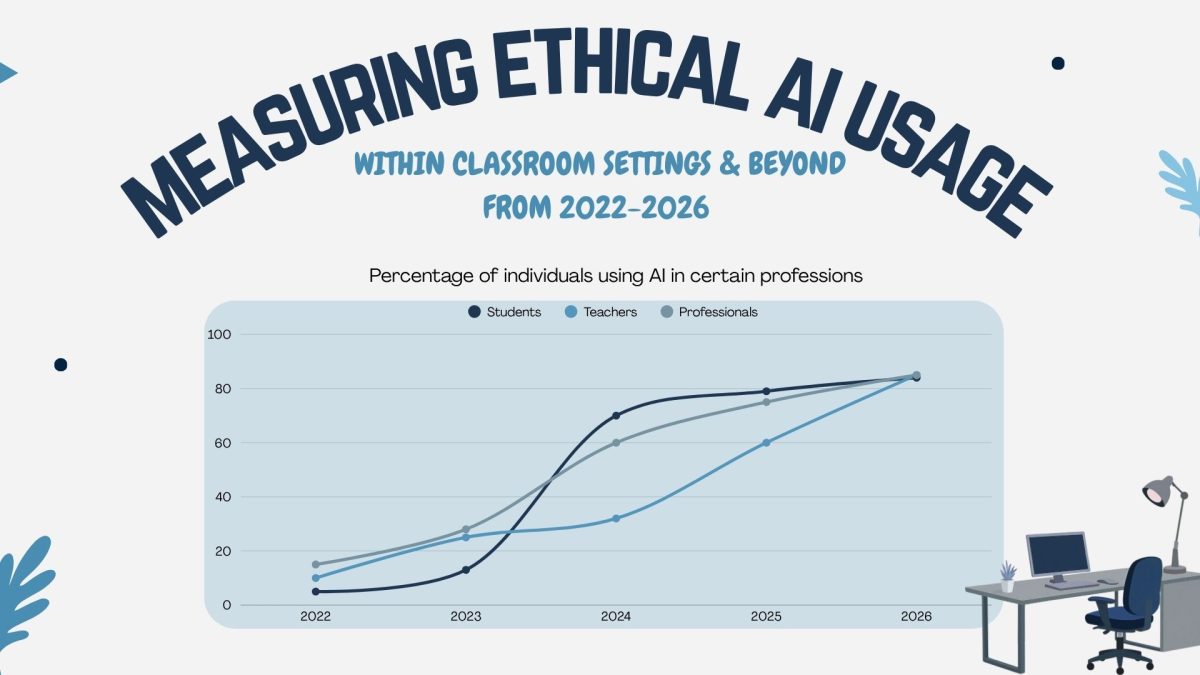
The Advanced Placement (AP) program is widely considered one of the most challenging academic pathways available to high school students. It allows high school students to earn college credit while strengthening their competitiveness in college admissions by demonstrating a willingness to challenge themselves academically. However, few students wonder the reason behind why the AP process stretches across nearly six months—from the registration deadline in November to exams held in May. Is such an extended timeline truly necessary? To understand the answer, it’s important to look behind the scenes of the AP program.
The AP timeline typically begins between August and September, when students enroll in their AP classes using classroom codes set up by their teachers in the College Board online platform – AP Classroom. By Oct. 3, schools must submit their official AP exam orders, confirming the number of students testing. The final registration deadline follows in mid-November. After this date, students who register late must pay an additional fee of up to $225 per exam, compared to the standard $99 fee in the United States and Canada. AP exams are administered in May—scheduled from May 4 to May 15 in 2026—and scores are released online in July.
This year, Mater Dei High School expects approximately 650 to 700 students to take a total of 1,600 AP exams. Coordinating this massive operation from winter through spring is Academic Admissions Counselor, NCAA & AP Coordinator Jeremy Riche, who oversees exam logistics and preparation.
“AP exam ordering happens in November because extensive planning is required to administer exams in May,” Riche said. “From November to May, I coordinate logistics such as renting tables and chairs and working with facilities to prepare testing layouts.”
Despite there being plenty of time for the preparation process, Riche notes that challenges still arise during the two-week testing period. Besides, his burdens do not stop at working behind the process but also include thinking quickly on his feet when encountering the obstacles. The ability to solve problems quickly has always been at the forefront of his mind, as there is no time to wait or pause.
“[Last year] the facilities team took down more tables than they should have, and so we were short about 30 tables when I showed up in the morning,” Riche said. “They were right in the hallway, so then I started to bring the tables back into the gymnasium one by one and eventually more people came by and were able to help.”
As AP Coordinator, Riche also ensures consistency among AP courses across different subject areas. Teachers submit their syllabi through the College Board’s audit process, which Riche reviews before approval.
“Once approved, I create their AP sections,” Riche said. “Throughout the year, the College Board sends updates and resources, which I share with AP teachers to help them better support students using tools like AP Classroom.”
Serving as a communication bridge between AP teachers and the College Board, Riche is responsible for sharing updates on policies, curriculum changes, and important announcements, ensuring no information is missed.
Another often-overlooked group in the AP process is the readers who grade exams. Although AP teachers might not be AP readers, AP readers are compulsively experienced AP teachers. To be selected as readers, they have to meet the eligible requirement of working at a specific AP course within a minimum of three years. Then, teachers have to apply through the “RAISE” platform and, due to the large applicant pool, only about 20,000 to 30,000 educators are selected annually. After approval, readers must complete extensive training to ensure consistent grading based on the rubric before receiving final authorization.
Mater Dei High School is proud to have several teachers who have previously served or currently serve as AP readers. English Teacher Kate Aceves has worked as an AP reader for several years and shared insight of the role.
“It’s exhausting,” Aceves said. “You’re reading and scoring over 500 essays in roughly 35 hours, often while you’re still teaching, giving finals, and wrapping up the school year. That means long days staring at a screen, making careful decisions essay after essay, with very little built-in break time.”
Since 2020, the College Board has transitioned from in-person grading to virtual, home-based scoring due to COVID-19. While remote grading allows more teachers to participate, it also reduces collaboration between humans.
“There isn’t much collaboration like there is at an in-person reading, so you really have to trust the rubric and your training,” Aceves said. “That said, one thing that stays constant is the purpose of the work: the goal is never to ‘catch’ students making mistakes. It’s to reward the points they earn.”
Aceves explained that readers prioritize clear thinking, defensible claims, and specific evidence over rigid formulas or memorized templates. As a result, she has shifted her teaching approach to focus more on developing students’ reasoning and analytical skills rather than strict structures.
Applying the same teaching technique, English Department chair Eunice Kim has been serving Mater Dei since 2020 and also emphasizes the necessity of reshaping student’s logical mindset at the very beginning.
“I place greater emphasis on helping students articulate a clear line of reasoning, develop thoughtful commentary, and directly connect evidence to their claims,” Kim said. “I also teach with the 1-4-1 rubric in mind — focusing less on overly complicated strategies and more on what actually earns points on the AP Lang exam. When I give feedback, I now frame it the way an AP Reader would think, which helps students better understand how their writing would be evaluated on the actual exam.”
As mentioned above, the strategy of utilizing 1-4-1 is commonly used in AP English Essays. This structures by providing rigid grading scales for each category: 1 point for clear thesis, up to 4 points for profound evidence and commentary, and 1 point for sophistication – the mastery of both language and grammar.
One undeniable fact is the needed function of the evidence and commentary portion in the entire essay. They are both structuring the core of a persuasive essay. Meanwhile, the evidence provides factual support to prove the claim, the commentary is to analyze and dive in deeper into the significance of that evidence to state the argument.
“One of the most common differences between average and high-scoring essays is commentary — explaining WHY evidence matters and HOW it supports the argument,” Kim said. “ Many students have strong ideas, but the strongest essays guide the reader clearly through the writer’s thinking.”
According to Aceves, one important tip for students taking AP exams with writing sections is to answer the actual prompt. Use specific moments from the text, not vague references. Don’t panic if your essay isn’t ‘fancy.’ A clear thesis, consistent analysis, and concrete evidence go a long way—and finishing strong can reinforce your argument.
Keep in mind:
As AP season approaches: Follow teachers’ guidance, review each section carefully, and take time to rest before exam day. Ace it, Monarchs!
![GET UP Students laugh and dance at a school rally. All the events and rallies hosted by ASB help bring students together and make school an enjoyable place to be. Senior Maddy O’Connor believes ASB keeps everything together and the school spirit alive. “A lot of things wouldn't be as organized [without ASB] and it'd be kind of boring,” O’Connor said. “ASB brings joy to Mater Dei, and pretty much [all things] cool.”](https://thescarletscroll.com/wp-content/uploads/2026/05/HEIF-Image-1200x800.jpeg)
![OUT OF THE PARK Sophomore Ally Roman takes a swing during her sixth game of the spring season. On Wednesday, Mar. 18, the JV softball team faced Villa Park in a tough matchup. “ I've made a lot [of sacrifices for softball],” senior Savanah Duncan said. “It takes up a lot of time, especially playing at a high level. I would say you have to sacrifice a lot of your time and a lot of outside activities, because a lot of time is just spent on the softball field.”Photo courtesy of Ali DePhillips.](https://thescarletscroll.com/wp-content/uploads/2026/04/HEIF-Image-10-800x1200.jpeg)